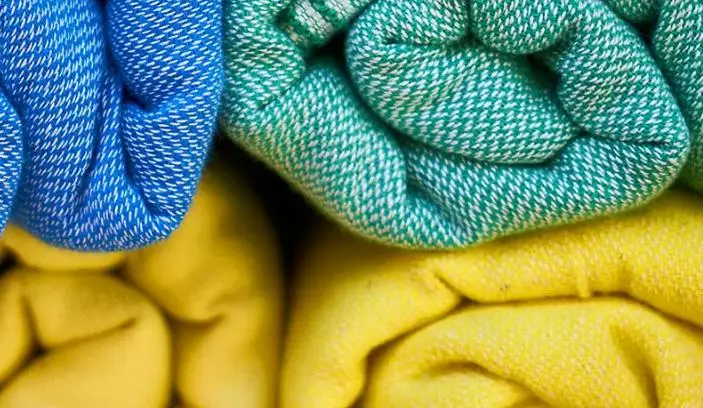
Acrylic fabric is a man-made material created from a type of plastic called acrylonitrile. The fabric is soft and cozy. Plus, it tends to be lightweight and easy to maintain. This synthetic material is actually an affordable alternative to costly wool; that is the main reason why it’s widely used.
In this article, we’ll explore what is acrylic fabric, how it’s manufactured, and its pros and cons, along with a little bit of history.
Acrylic fabric is a textile created through chemical processing that turns liquid compounds into wearable fibers. Made from at least 85% acrylonitrile monomers, the fabric is very affordable and easy to maintain. If you’ve ever worn a winter sweater that felt soft but wasn’t wool, it was probably acrylic. The same goes for a lot of blankets you find at home.
It looks a bit like wool and even feels similar at first. The difference is, it’s much cheaper. That’s one of the main reasons it became so popular over time.
Acrylic fabric isn’t very old. It was first developed in the 1940s by the American DuPont Corporation. Back then, companies were experimenting with synthetic materials, trying to find cheaper alternatives to natural fibers.
It didn’t become popular right away, though. It took a few years before people started using it more widely. By the 1950s, it was already being used in clothing.
Now, most of it is produced in countries like China and India rather than where it first started.
Acrylic fabric is made from a material called polyacrylonitrile. This comes from petroleum-based chemicals. These chemicals go through a process that turns them into long fibers. And ultimately, fibers are spun into yarn and fabric.
You’ll often see people searching for something like “What is fabric medium for acrylic paint?” Fabric medium for acrylic paint is something completely different. That’s used in art, not in making the fabric itself.
The fabric is made through a chemical process extending through multiple steps.
The very first step is to create a polymer of acrylonitrile, polyacrylonitrile, in a chemical process known as “polymerization” using a water-based solution.
Next, the polymer is dissolved using a chemical solvent. As a result, a gel-like material is formed that is extruded through spinnerets to make filaments of acrylic fiber.
Later, the same solvent is used to collect acrylic fibers through the spinning process.
After spinning, fibers are washed, stretched, and crimped. This step increases their strength and makes them suitable for spinning into yarn.
At the end, manufacturers weave this yarn into fabric. They also add colors during or after production to achieve vibrant colors.
Using acrylic fabric is beneficial for multiple reasons:
Like any material, acrylic fabric has its downside.
Unlike natural fabric, acrylic fabric is synthesized from chemical processes in factories to offer the warmth and softness of wool at a lower cost. Many people wonder, “What is acrylic fabric made from?” The simple answer is that it is made from synthetic, petroleum-based compounds, acrylonitrile monomers.
The fabric is cheap, durable, and easy to wash. Therefore, it is widely used for making clothing and home furnishings as well as for crafting purposes.
While the material consists of synthetic components that do not break down in nature, it creates environmental issues. Overall, it’s a useful everyday material, but it’s important to be aware of its limitations.