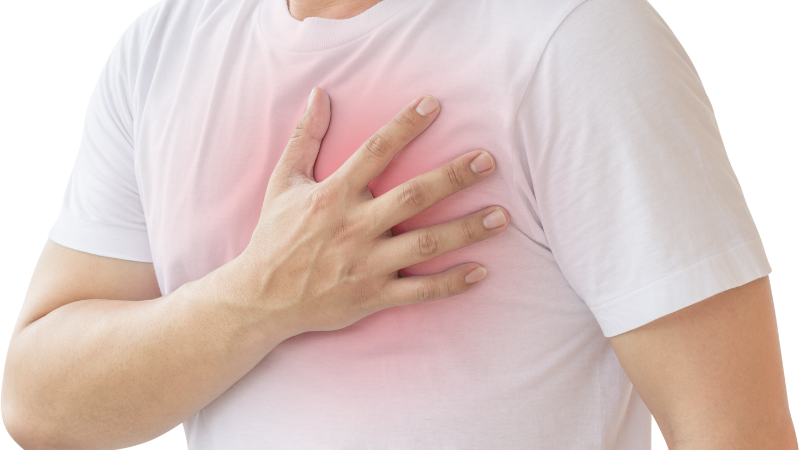
People of any age may be affected with chest pain, and its common causes are heart, lung, muscle, or digestive problems. Some people feel mild tightness in the chest, while others experience burning pain, pressure, or discomfort that spreads toward the arm or shoulder. As this discomfort may sometimes point towards a serious condition, proper medical treatment is important.
However, many individuals also look for natural ways to manage mild symptoms. As a result, interest in homeopathic remedies for chest pain continues to grow worldwide.
This article covers causes, common homeopathic medicines, benefits, risks, and important safety information related to chest pain.
Chest pain develops from several medical conditions. Some causes are mild. Others are life-threatening.
Common causes include:
According to medical reviews, chest pain connected with heart disease may include pressure, a squeezing sensation, breathlessness, sweating, and pain moving into the arm or jaw.
People use homeopathic remedies for chest pain because homeopathy focuses on individual symptoms, emotional state, and body constitution. Therefore, some patients prefer natural approaches alongside standard treatment.
Homeopathic practitioners often match remedies with specific symptom patterns, such as:
Homeopathy is commonly used as complementary care, not as emergency treatment for heart attack symptoms.
Crataegus, also called hawthorn, is one of the most discussed homeopathic remedies for chest pain related to cardiac weakness and angina symptoms.
Homeopathic sources describe Cretaceous for:
Some practitioners consider it a heart tonic in homeopathy.
However, people with heart disease should never replace prescribed cardiac medicine with homeopathic remedies without physician guidance.
Cactus grandiflorus is often recommended for severe chest constriction.
Symptoms linked with this remedy include:
Homeopathic literature describes the remedy for people who feel their chest is compressed or restricted.
Spigelia is commonly used in homeopathy for stabbing or needle-like chest pain.
Reported symptom patterns include:
Some homeopathic practitioners use Spigelia when chest pain feels sudden and intense.
Rhus toxicodendron is mainly discussed for muscular or inflammatory chest pain, especially costochondritis.
Symptoms may include:
Pain improved with gentle movement.
Homeopathic articles describe Rhus Tox for inflammation affecting the chest joints and muscles.
Bryonia alba is another remedy used for chest discomfort linked with inflammation.
Typical indications include the following:
Homeopathic practitioners often connect Bryonia with pain that improves during rest.
Seek emergency medical help immediately if chest pain appears with:
Heart-related chest pain can become serious very quickly, so emergency medical care is important. Home remedies or self-treatment are not safe during severe chest pain.
Homeopathic remedies for chest pain lack scientific evidence. The research on homeopathy shows inconsistent outcomes, while it fails to provide strong clinical evidence for multiple medical conditions.
Moreover, doctors and health experts do not recommend using only homeopathy for serious conditions such as heart attack, severe asthma, or cardiovascular emergencies.
Homeopathic products contain substances that are diluted to extreme levels, which results in reduced side effects, but safety risks still exist. The potential risks that exist include the following:
Medical professionals recommend that patients who experience heart problems first consult a certified medical doctor before they start using homeopathic treatments.
Many people explore homeopathic remedies for chest pain, mild discomfort, stress-related symptoms, chest wall inflammation, or supportive care. Remedies such as Crataegus, Spigelia, Bryonia, Rhus Toxicodendron, and Cactus Grandiflorus are commonly discussed in homeopathic practice.
Still, chest pain may signal serious heart or lung disease. While scientific evidence supporting homeopathy remains limited, professional medical diagnosis is essential. However, homeopathy may be used as complementary care under qualified supervision, especially when symptoms are not related to emergencies.
Also Read: Apple Cider Vinegar for Essential Tremors: Does It Really Help?